
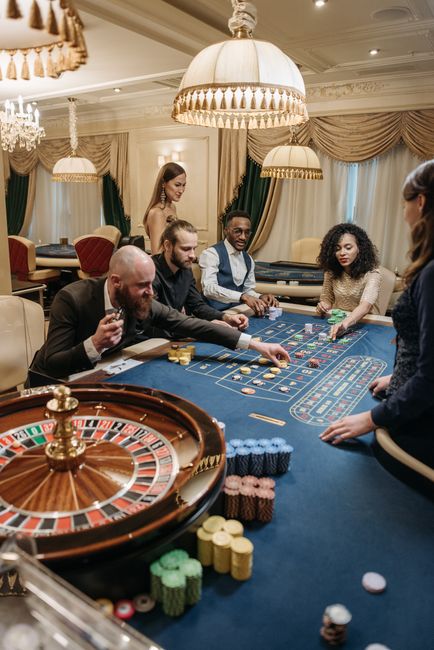
The House Always Wins? Why Smart Players Still Love iGaming
Every gambler has heard the phrase “the house always wins.” It's technically true over infinite time, and yet millions of people still log into casinos, fire up slot reels, and grind poker tables every single day. That contradiction isn't stupidity. It's entertainment, strategy, and the occasional dance with variance. The real question isn't whether the house has an edge — it's whether you understand that edge well enough to enjoy the ride without getting taken for a fool.
Let's break down what actually happens across the four big verticals: casino games, slots, betting, and poker. Each one works differently, and treating them as interchangeable is the fastest way to lose money.
Casino Games: Where Math Rules Everything
Table games like blackjack, roulette, and baccarat sit at the heart of the casino floor. What separates them from slots is that you can calculate a precise house edge before you sit down. European roulette, for example, has a single zero and a house edge of 2.7%. American roulette adds a double zero, bumping that edge to 5.26%. Same wheel, same spin, twice the bleed.
Blackjack is a different animal because skill matters. Basic strategy — a mathematically optimal decision chart for every hand — can push the house edge below 0.5% on a good rule set. That's why casinos sweat card counters. They can't change the math, so they boot the people who exploit it. If you want a genuinely useful tip: learn basic strategy before you ever bet a dollar at a blackjack table. It won't make you rich, but it can cut your expected losses dramatically compared to guessing.
Baccarat looks intimidating but is actually one of the simplest games in the building. Bet the banker, ignore the tie bet, and you're looking at a house edge around 1.06%. That's why high rollers crowd the baccarat pits. It's not glamour; it's efficiency.
Slots: Volatility, RTP, and the Myth of Hot Streaks
Slots are the cash cow of iGaming, accounting for the majority of casino revenue worldwide. Unlike blackjack, there's no decision that changes the outcome. The only things that matter are RTP (return to player) and volatility. There is a useful overview at keonhacaii5.com.co.
- RTP is the percentage of all wagered money a slot pays back over millions of spins. A 96% RTP game returns $96 for every $100 wagered in the long run — but “long run” here is measured in millions, not your Thursday night session.
- Volatility describes how the wins are distributed. Low volatility slots pay small amounts frequently. High volatility slots go cold for long stretches, then drop massive wins.
- Hit frequency is the percentage of spins that produce any win at all. Many high-volatility games pay on fewer than 20% of spins.
The “hot machine” myth refuses to die, but each spin on a modern digital slot is independent. There's no memory, no momentum, no machine that “owes you one.” If you're choosing between two slots, a 96.5% RTP game is objectively better than a 92% one over thousands of spins. That single percentage point is worth real money.
Sports Betting: Information, Not Luck, Wins Long-Term
Sports betting looks like a coin flip to outsiders. It isn't. Bookmakers set lines using sophisticated models, then adjust them based on where public money flows. Your job as a bettor is to find spots where the line is wrong — and that's genuinely hard.
The concept that matters most is the vig, also called the juice. A standard -110 line on both sides of a bet means you have to win 52.4% of the time just to break even. The bookmaker collects the difference regardless of the outcome. Beating that requires either sharper information than the market or betting into lines that haven't adjusted yet.
Good bettors think in terms of expected value (EV), not wins and losses. A +150 underdog that wins 45% of the time is profitable even though it loses more often than it wins. Conversely, hammering -300 favorites because they “always win” is a slow death by a thousand cuts. Track every bet. If you don't know your ROI over several hundred wagers, you're flying blind.
Poker: The One Game Where You Compete Against People
Poker is the odd one out in iGaming because the house doesn't play against you. It takes a rake — a small cut of each pot — and steps aside. Your profit comes directly from worse players. That changes everything.
This is why poker rewards study in a way slots never can. Winning players do things like:
- Track their hands using software to find leaks in their own game.
- Study ranges rather than specific hands, thinking in probabilities instead of certainties.
- Adapt to opponents — tightening up against calling stations, bluffing more against nitty players.
- Manage bankrolls by playing stakes where a bad session won't cripple them.
The most common mistake amateurs make is playing too many hands. In Texas Hold'em, a disciplined player folds the vast majority of starting hands. New players see a suited ace-rag and can't let it go, then bleed chips all night. Tighten up, and your win rate climbs almost immediately.
Bankroll Management: The Skill Nobody Talks About
You can be a slightly losing player and still enjoy iGaming for years if you manage your money correctly. You can also be a winning player and go broke in a weekend if you don't.
Here's a rough framework that experienced players actually use:
- Slots and casino: Treat it as pure entertainment spending. Set a session budget you're comfortable losing, and stop when it's gone.
- Sports betting: Bet 1–3% of your bankroll per wager. Ten straight losses — which happens more often than you'd think — shouldn't wipe you out.
- Poker: Cash game bankrolls of 20–40 buy-ins at your stake level are standard for serious players. Tournaments need 50–100 buy-ins because variance is brutal.
A good rule of thumb: if losing your entire deposit for the month would affect your rent, groceries, or mood for more than an hour, you're playing too big.
The Bottom Line on iGaming
The house edge is real, the variance is real, and nobody beats it consistently without either skill (poker), information (betting), or discipline (everything else). But that's exactly why iGaming rewards people who take it seriously. The casual player who treats every game like a lottery ticket funds the ecosystem, while the informed player extracts value, enjoys the process, and knows when to walk away.
None of this is about beating the casino. It's about understanding the game well enough that the experience — win or lose — stays on your terms. The house will always have its edge. Your job is to make sure it doesn't have your rent money too.
tag: iGaming

Priya Nair Author
Old walls need breathable lime mortar, careful joint preparation and gentle tools to avoid damaging historic stonework during repairs.
YOU MAY ALSO LIKE

How to Repoint a Historic Stone Wall Correctly
Sep 23
10Learn how to select, shape and lay stones without mortar, building a sturdy wall that suits rural boundaries and wildlife.
read more
A Beginner's Guide to Dry Stone Walling Techniques
Sep 17
10Explore the geological origins and practical qualities of Britain's most common building stones, from durable granite to easily carved sandstone.
read moreMasonry
-

ERRIC CATONA
Lime mortar allows old stone walls to breathe and move slightly, making it essential for sensitive repairs on historic buildings.
May 19, 2016 at 5.12 pm
Reply
ERRIC CATONA
Local stone reveals ancient environments, from sandy deserts to deep seas, helping you date and understand nearby historic structures.
May 19, 2016 at 5.12 pm
Reply -
ERRIC CATONA
A basic mason's kit includes tungsten-tipped chisels, a wooden mallet, a dummy hammer and safety glasses for comfortable stone shaping.
May 19, 2016 at 5.12 pm
Reply
Heritage
Your email address will not be published.