
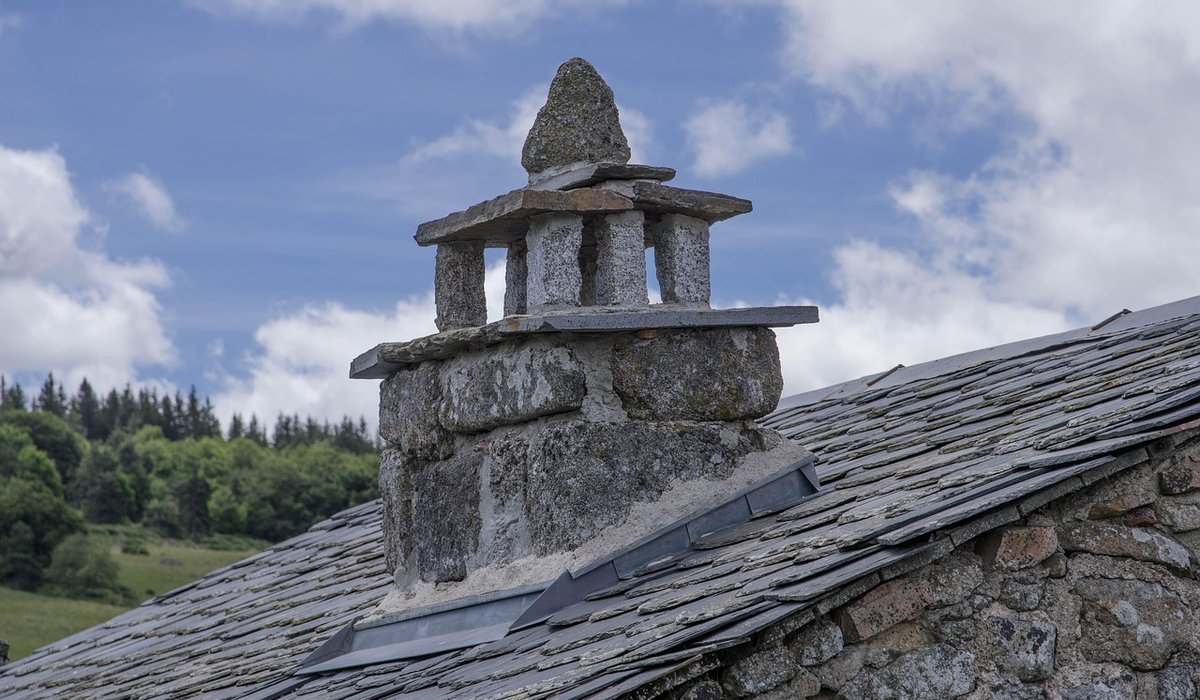
Field Guide to Common Rocks Used in British Buildings
Reading a Wall Like a Geologist
Stone is heavy. Before canals, railways and lorries, nobody carted rock further than they had to. So the walls of a parish church, a farmhouse or a garden boundary are almost always built from whatever lay closest to hand — which makes them a rough geological map of the parish. Learn half a dozen stones and you can place a landscape, guess at long-abandoned quarries and choose materials for a garden that looks as though it has always been there. Here is how to recognise the main characters.
Granite: The Igneous Outsider
Granite is the odd one out. It cooled underground from molten rock, so it has no bedding, no fossils and no grain direction. Look for a coarse, speckled surface with visible crystals — glassy grey quartz, creamy or pink feldspar, and flecks of dark mica that catch the light. Freshly split faces sparkle; weathered ones go dull grey and grow lichen readily.
- Where it belongs: Devon and Cornwall, especially Dartmoor and Bodmin; the Lake District; the Cairngorms and Aberdeen; much of Galloway.
- In buildings: rugged church towers, boundary stones, kerbs, plinths and rubble walls, usually with wide, pale mortar joints.
- Practical note: hard, nearly impermeable and expensive to dress, so it tends to appear as rubble or big rough blocks rather than fine ashlar.
Limestone: Sedimentary and Full of Fossils
Limestone formed on warm sea floors from the shells and skeletons of marine life. Colours run from honey and cream to pale grey and near-black, and it often holds visible fossils — crinoids, brachiopods, ammonites. A drop of dilute acid makes it fizz. Beds are usually thick, and it splits along horizontal planes rather than into thin sheets.
The Cotswolds give the classic honey-coloured stone; Lincolnshire, Derbyshire, Somerset and the Yorkshire Dales give greys and creams. Jurassic limestone weathers gently and takes tooling beautifully, which is why it appears in finely jointed ashlar, carved window tracery and moulded cornices.
- Look for: pale, blocky coursing, visible shell fragments and chunky mortar joints on older rubble work.
- Watch for: blackened faces in towns — that is soot and gypsum crust, common on Victorian city churches.
Sandstone: The Most Varied Stone in Britain
Sandstone is compacted sand. Rub it with a fingertip and you can feel the grit; a hand lens shows rounded grains. Colours span buff, red, pink, brown and grey, and it frequently shows bedding lines or cross-bedding left by ancient dunes and river channels.
It is the commonest building stone in Britain, which is why it looks different in every county. Red Permian sandstone runs through Dumfries and Galloway, Cumbria and the Midlands. Yorkshire has the Millstone Grit alongside the finer stone of York and Bramley Fall. Cheshire and Lancashire have their own warm buffs, and the Pennines are scattered with small quarries, now mostly overgrown.
- Texture: gritty, often with iron staining along the bedding planes.
- Weakness: some sandstones are porous and crumble or laminate — listen for hollow-sounding faces and look for blown corners on carved detail.
- Garden use: superb for paving, dry stone walling and rockery stone, weathering to a soft, mellow patina.
Slate: Roofing that Tells a Story
Slate is metamorphic — mudstone squeezed and heated until it splits into thin, tough sheets. Recognise it by its dull satiny sheen, its fine grain and the way a tapped tile rings faintly. Colours run from blue-grey and purple to green; Westmorland slate has a distinctive pale green-grey cast.
Roofing slate places you immediately. Welsh slate from the quarries of Gwynedd roofed much of Britain from the Victorian period onwards, travelling by rail and sea, so a Welsh roof far from Wales usually means a nineteenth-century building. Heavy stone slate, laid in diminishing courses with the largest tiles at the eaves, tells of an older and more local tradition — the Cotswolds, the Pennines, and the Horsham stone of Sussex. Thick, rough-edged and undulating, it is a very different creature from a thin, regular Welsh tile.
Flint: Nodules, Knapping and Galleting
Flint is silica formed within chalk. Across Norfolk, Suffolk, Hampshire, Sussex, Kent and Wiltshire, field clearance produced flint in abundance and little else, so builders used it brilliantly.
- Appearance: black or blue-black inside, wrapped in a white chalky cortex; broken faces are smooth, slightly glassy and chip to a sharp edge.
- Wallwork: knapped flint, split to show a flat dark face, laid in neat courses with lime mortar; unknapped rubble looks lumpy and cob-like.
- Telltales: brick quoins and window surrounds, because flint is hard to shape into corners, and galleting — small chips of flint pressed into the mortar for grip and drainage.
Using This in the Garden
If you want a wall, path or rockery that sits properly in its setting, match the local stone. Reclaimed material repays the hunt: old kerbs, coping stones, slate and field flint all carry a weathered surface nobody can fake. Build or repoint historic walls with lime mortar so they can breathe and shed water; hard cement traps moisture and slowly frosts a wall apart. And when you are out walking, read the quoins, the coursing and the roof above — the stone will tell you where you are before any signpost does.
tag: Geology

Eleanor Hartley Author
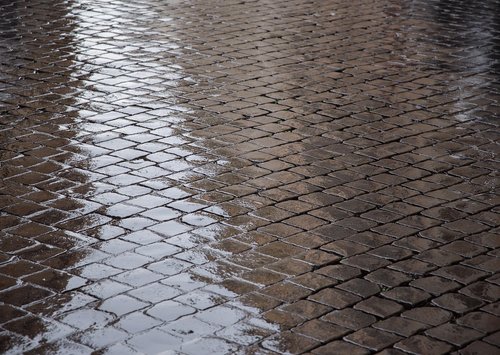
Compare limestone, sandstone and granite for paths, weighing colour, texture, porosity and local availability before you buy for your project.
YOU MAY ALSO LIKE
Choosing the Right Natural Stone for a Garden Path
Sep 26
10Old walls need breathable lime mortar, careful joint preparation and gentle tools to avoid damaging historic stonework during repairs.
read more
How to Repoint a Historic Stone Wall Correctly
Sep 23
10Learn how to select, shape and lay stones without mortar, building a sturdy wall that suits rural boundaries and wildlife.
read moreMasonry
-

ERRIC CATONA
Explore the geological origins and practical qualities of Britain's most common building stones, from durable granite to easily carved sandstone.
May 19, 2016 at 5.12 pm
Reply
ERRIC CATONA
Lime mortar allows old stone walls to breathe and move slightly, making it essential for sensitive repairs on historic buildings.
May 19, 2016 at 5.12 pm
Reply -
ERRIC CATONA
Local stone reveals ancient environments, from sandy deserts to deep seas, helping you date and understand nearby historic structures.
May 19, 2016 at 5.12 pm
Reply
Heritage
Your email address will not be published.