

Understanding Limestone, Sandstone and Granite in British Buildings
The Stone Beneath Our Feet
Britain's historic buildings and gardens are a geological map in miniature. From the honey-coloured limestone of the Cotswolds to the rugged granite of Aberdeen and the mellow sandstone of Yorkshire, the stones we build with tell the story of the land itself. Understanding the three great building stones — limestone, sandstone and granite — helps anyone involved with historic properties make informed decisions about repair, restoration and new work.
Limestone: The Sedimentary Workhorse
Limestone forms in warm, shallow seas. Over millions of years, the shells and skeletons of marine creatures — corals, molluscs, microscopic algae — settle on the seabed and are compressed into calcium carbonate. Britain's limestone belts run from Dorset to Yorkshire, with famous names like Portland stone, Bath stone and Lincolnshire limestone.
Practically, limestone is relatively soft when first quarried, which makes it wonderfully workable. Medieval masons carved intricate tracery, pinnacles and grotesques from it. It also weathers gracefully, developing a patina of grey, cream or honey. However, it is vulnerable to acid rain, which dissolves the calcium carbonate and can wash away detail. In gardens, limestone paving offers a cool, pale surface that ages well, though it can become slippery when wet. For historic repairs, matching the original bed is crucial — a stone from a different quarry may weather at a different rate.
Sandstone: The Carver's Canvas
Sandstone is a sedimentary rock made from grains of sand — often quartz — cemented together by silica, calcium carbonate or iron oxides. The cement and grain size determine its colour and durability. Britain has vast sandstone deposits: the red sandstones of Devon and Cumbria, the grey and buff stones of Yorkshire and Northumberland, and the famous York stone used for paving.
Sandstone is generally easier to carve than granite, and it splits along natural bedding planes, which made it a favourite for both grand facades and humble cottages. Its porosity varies enormously. A well-cemented, fine-grained sandstone can last centuries; a poorly cemented, coarse one may crumble in a few decades. In gardens, sandstone paving and walling bring warmth and texture, but it must be laid on a proper base and pointed with a lime mortar to allow movement. Look for stones with a consistent colour and no visible cracks along the bedding.
Granite: The Igneous Intruder
Granite is an igneous rock, formed deep underground from slowly cooling magma. Its interlocking crystals of quartz, feldspar and mica make it exceptionally hard and resistant. Britain's granite comes from Cornwall, Devon, Aberdeen and Shap in Cumbria. It was the stone of choice for harbour walls, bridges, kerbs and monuments — places where strength and weather resistance mattered more than fine detail.
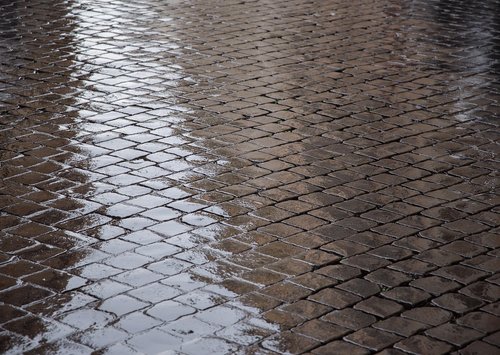
Granite is difficult to carve, so it tends to be used in blocks, setts and rough-dressed forms. It is virtually non-porous, so it resists frost and pollution, but it can be expensive and heavy to handle. In the garden, granite setts make durable paths and driveways, whilst granite boulders or rockery stones provide a rugged, naturalistic feature. Because it is so hard, granite is best left in its natural cleft or sawn finish rather than polished, which can look out of place in historic settings.
Reading the Stone: Practical Clues for Builders and Gardeners
When working with any of these stones, a few practical observations will save time and trouble:
- Weathering patterns: Limestone often shows pitting and gypsum crusts; sandstone may reveal honeycombing or scaling; granite usually stays sound but can develop a dirty surface.
- Bedding direction: Sedimentary stones (limestone and sandstone) should be laid on their natural bed — the way they sat in the quarry — to avoid delamination.
- Porosity and frost resistance: Test by soaking a sample and subjecting it to freeze-thaw cycles. Limestone and some sandstones are frost-susceptible; granite is not.
- Colour matching: For repairs, source stone from the same geological formation if possible. A slightly different colour will weather differently and stand out.
- Reuse and salvage: Reclaimed stone is often the best match for historic work. Clean it gently — no acid on limestone or sandstone.
Choosing Stone for Gardens and Historic Repairs
For historic repairs, the guiding principle is like-for-like: match the original stone in type, colour and texture. If the original is unavailable, a close geological match is the next best thing. For new garden projects, think about local character. Limestone paving suits formal terraces and cottage gardens; sandstone is ideal for informal patios and paths; granite setts and steps bring a robust, timeless feel.
Always use a lime mortar for pointing, never a hard cement, as it traps moisture and can damage softer stones. Ensure good drainage beneath paving, and allow for movement. With care, the stones of Britain — from the warm limestone of the south to the tough granite of the north — will continue to serve buildings and gardens for centuries to come.
tag: Stone Types

Oliver Pemberton Author
Lime mortar allows old stone walls to breathe and move slightly, making it essential for sensitive repairs on historic buildings.
YOU MAY ALSO LIKE
The Role of Lime Mortar in Old Stone Structures
Sep 6
10Local stone reveals ancient environments, from sandy deserts to deep seas, helping you date and understand nearby historic structures.
read more
Reading Geology in Local Building Stones
Sep 1
10A basic mason's kit includes tungsten-tipped chisels, a wooden mallet, a dummy hammer and safety glasses for comfortable stone shaping.
read moreMasonry
-

ERRIC CATONA
Assess decay, remove loose material and replace or repair the sill with matching stone, preserving the window's character and weather resistance.
May 19, 2016 at 5.12 pm
Reply
ERRIC CATONA
Reclaimed setts, flagstones and brick edgings can create a relaxed cottage garden that ages gracefully and supports pollinators.
May 19, 2016 at 5.12 pm
Reply -
ERRIC CATONA
Porous stones absorb water, which expands when frozen, causing spalling; learn how to diagnose damage and choose suitable protective treatments.
May 19, 2016 at 5.12 pm
Reply
Heritage
Your email address will not be published.