
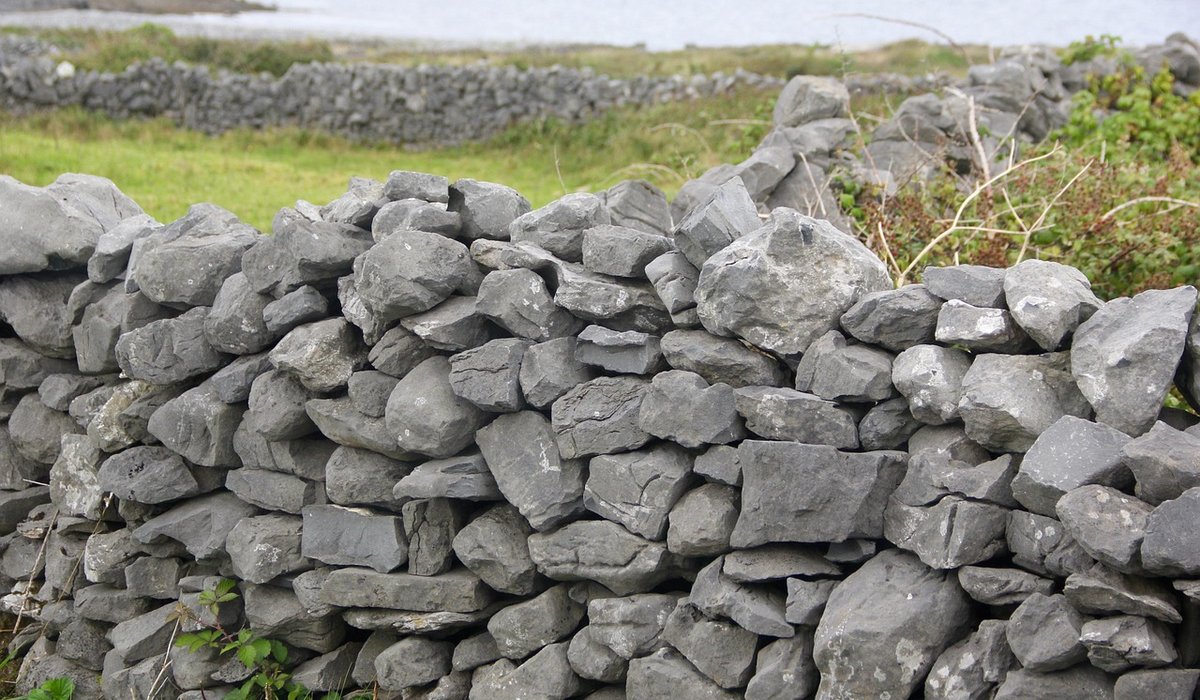
Choosing the Right Natural Stone for a Garden Path
Few garden decisions stay with you as long as the stone you lay underfoot. A path takes the worst of the British weather — standing water in February, a baking week in June, the grit of a thousand boots and the slow green creep of algae in the shade. Choose well and the surface quietly improves with age, softening and silvering as it weathers. Choose badly and you will be lifting spalled, wobbly flags within a decade.
Three stones do most of the work in British gardens: limestone, sandstone and granite. Each has its own temperament, and each behaves differently when wet, frozen or shaded. Here is how to weigh them up before you order a single crate.
Begin With the Conditions, Not the Colour
It is tempting to start with a colour swatch, but the site has the final say. Walk the route first and ask yourself a few blunt questions.
- Traffic: a scramble to the compost heap and a main axis from the back door ask very different things of a stone. Well-used paths want a dense, hard-wearing surface.
- Shade and damp: north-facing or tree-shaded paths stay wet for days. Smooth sawn faces become genuinely treacherous; riven or textured surfaces hold grip.
- Frost exposure: open, windy sites freeze harder and thaw faster. Stone that cannot shed water will eventually spall.
- Sub-base: no stone performs on a poor base. A compacted 100mm of MOT Type 1, topped with around 30mm of sharp bedding grit, is the benchmark for a domestic path.
Limestone: Pale, Calm and Handsomely Aged
Limestone is sedimentary, formed from compressed shell and sediment, and it reads as the most restrained of the three. Colours run from cream and buff through to dove grey and blue-grey, with a fine, even grain and a soft, almost chalky surface.
The family is broad, and porosity is where it divides. Dense varieties such as Portland and Purbeck are perfectly capable of carrying a garden path, while softer oolitic stones — the honeyed stones of the Cotswolds and Lincolnshire — are lovelier for walling and carving than for a wet, frosty route. Expect absorption figures anywhere between roughly 2% and 12%, and always ask for the frost-resistance data before you commit.
Sawn and smooth-finished limestone gives a formal, cool formality, but it can be slick underfoot when wet. Keep joints slightly open so water drains away, and consider a lightly textured or honed finish rather than a polished one. Colour-wise it sits beautifully beside grey render, slate, and silver-leaved planting.
Sandstone: The British Workhorse
Sandstone is quartz grains cemented together under pressure, and it is the stone most British gardens end up using. It rives naturally into flat flags with a gently rippled face, which gives excellent grip even in the rain, and it comes in a warm spread of buffs, honeys, greys, red-browns and soft purples.
A typical porosity of around 2% to 6% puts it comfortably in frost-resistant territory, provided the stone is bedded the right way up — bedding planes horizontal, as they sat in the quarry. Laid on their edge, flags will delaminate within a few winters.
Sandstone is usually the most affordable of the three per square metre, and its warm tones flatter red brick, terracotta pots and cottage planting. Reclaimed stone carries a premium, but new riven flags weather into something very similar in a few seasons. Setts and larger flags from the same quarry will tie a path to a patio or step without a hint of mismatch.
Granite: Hard, Cool and Practically Permanent
Granite is igneous, cooled slowly underground, and it is the toughest option on the list. Porosity is usually under 1%, which means frost has almost nothing to work with, and the surface will still be sound when the rest of the garden has been replanted twice.
Silver-grey Cornish granite is the classic, with pinkish and speckled variants available. The palette is narrower than sandstone's — cool greys, pinks and buffs — and the price is higher, partly because the stone is dense, heavy and awkward to cut.
Where granite earns its keep is on steps, edgings, setts and heavily trodden routes. Sawn finishes look crisp and contemporary; flamed or bush-hammered faces give better grip. Keep joints tight, around 5mm to 8mm, and it will read as a single, seamless surface.
Porosity, Grip and the British Winter
Two technical points decide whether a path is still level in ten years' time. The first is absorption: anything above roughly 5% to 6% needs open joints and a free-draining bed, never a solid mortar base that traps water. The second is grip. Riven and flamed surfaces outperform polished sawn stone every time, particularly once a film of algae has formed in shade.
Give the path a fall of about 1 in 80 away from the house, keep it clear of soil splash, and avoid sealing riven stone unless you are certain the product allows the stone to breathe. Trapped moisture is far more damaging than an honest wet surface.
Buy Local, and Buy Enough
Stone that has travelled a short distance tends to look right, because it belongs to the local vernacular. It is also cheaper to move and easier to match later. In conservation areas and around listed buildings, matching the existing stone is often expected, and sometimes required.
Order around 10% more than your calculated area to allow for cuts, breakages and future repairs, and ask to see samples both dry and soaked — some stones change colour dramatically when wet. Ask for the quarry name, the absorption figure and a wet slip-resistance result. Then judge with your own eyes, on site, in the rain if you can manage it. That is the test that matters most.
tag: Stone Types

Priya Nair Author
Old walls need breathable lime mortar, careful joint preparation and gentle tools to avoid damaging historic stonework during repairs.
YOU MAY ALSO LIKE
How to Repoint a Historic Stone Wall Correctly
Sep 23
10Learn how to select, shape and lay stones without mortar, building a sturdy wall that suits rural boundaries and wildlife.
read more
A Beginner's Guide to Dry Stone Walling Techniques
Sep 17
10Explore the geological origins and practical qualities of Britain's most common building stones, from durable granite to easily carved sandstone.
read moreMasonry
-

ERRIC CATONA
Lime mortar allows old stone walls to breathe and move slightly, making it essential for sensitive repairs on historic buildings.
May 19, 2016 at 5.12 pm
Reply
ERRIC CATONA
Local stone reveals ancient environments, from sandy deserts to deep seas, helping you date and understand nearby historic structures.
May 19, 2016 at 5.12 pm
Reply -
ERRIC CATONA
A basic mason's kit includes tungsten-tipped chisels, a wooden mallet, a dummy hammer and safety glasses for comfortable stone shaping.
May 19, 2016 at 5.12 pm
Reply
Heritage
Your email address will not be published.